
Can I use the DSX-5000 or DSX-8000 for general electrical installations, or is it just for data cabling?
Posted on: 01/04/2025
The Short Answer: It's for Data Cabling, Not General Electrical Work
The Fluke Networks DSX-5000 and DSX-8000 are explicitly designed to certify structured data cabling, not general electrical installations.
These testers excel at verifying and troubleshooting copper and fibre optic network cabling, ensuring compliance with industry standards like TIA, ISO, and IEEE.
But if you're an electrician hoping to test general electrical wiring, such as power circuits or voltage levels, this isn't the tool for the job.
You'll need a multifunction tester (MFT) or an insulation resistance tester. That said, the DSX series can be invaluable if you're working on network cabling within commercial buildings where structured cabling is involved.

What the DSX-5000 and DSX-8000 Are Designed For
These testers are powerful tools—but only in the proper context. They are ideal for:
Certifying copper cabling – Testing Cat5e, Cat6, Cat6A, and higher
Fibre optic testing – With optional modules for Tier 1 certification
Fault finding – Identifying bad terminations, damaged cables, and performance issues
Ensuring compliance – Meeting structured cabling standards
So, while you won't be testing a consumer unit with a DSX-8000 anytime soon, it's an essential kit for data installers, network engineers, and even electricians who work with structured cabling.
Why It's Not Suitable for General Electrical Work
If you're wiring up a building's power supply, checking insulation resistance, or testing voltage, the DSX-5000 and DSX-8000 won't help much. Here's why:
No voltage testing – These testers don't measure AC/DC voltage.
No insulation resistance testing is essential for electrical safety but is not included.
No RCD/RCBO testing – Unlike an MFT, it can't check circuit breakers.
It is not built for high-current applications. It's designed for data transmission, not power distribution.
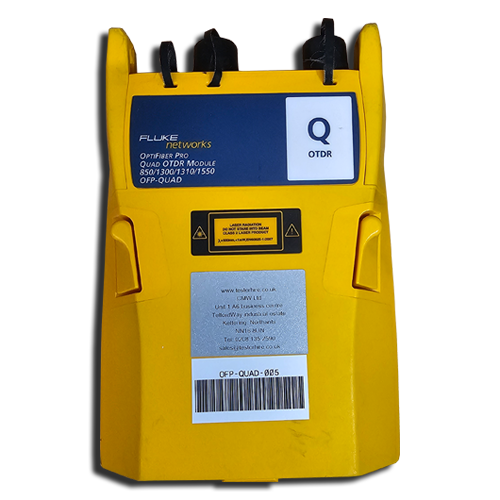
When an Electrician Might Use a DSX-5000 or DSX-8000
That said, there are scenarios where an electrician might benefit from having access to a DSX tester:
Installing structured cabling – If you're running and testing network cables in a commercial building.
Troubleshooting network issues – If your job involves diagnosing poor network performance.
Working on smart homes – Some high-end residential projects require certified data cabling.
If these sound like your typical jobs, hiring a DSX-5000 or DSX-8000 instead of purchasing one outright could be a smart move.

FAQs
Can the DSX-5000 or DSX-8000 test power circuits?
No, these testers are only for structured data cabling. For power circuits, use an MFT or insulation tester.
What's the difference between the DSX-5000 and DSX-8000?
The DSX-8000 supports higher frequency testing and Cat8 certification, making it more future-proof for high-speed networks.
Can I use a DSX tester to find a break in a cable?
Yes, both models can help locate breaks or faults in network cables.
Is it worth hiring a DSX-5000 or DSX-8000 instead of buying?
If you don't need it regularly, hiring can save you a significant upfront cost while still allowing you to complete certification jobs.
What alternatives should I use for general electrical testing?
For example, the Fluke 1664 FC, Megger MFT1741, or a similar multifunction tester.

Final Thoughts
If you're an electrician who focuses on power installations, the DSX-5000 and DSX-8000 will not replace your usual testers.
However, if your devices can be a game changer, and if your work overlaps with structured cabling, you only need them occasionally, hiring from CMW makes it easy to get the right tool without the full investment.
Are you looking for a DSX tester for your next project? Contact CMW today to discuss our hire options.
Related Products
