

What’s the difference between shielded (STP) and unshielded (UTP) cables?
Posted on: 02/04/2025
When it comes to network cabling, understanding the difference between shielded twisted pair (STP) and unshielded twisted pair (UTP) cables can save you time, money, and frustration.
Simply put, STP cables have a layer of shielding around the twisted pairs of wires, while UTP cables do not.
But the devil is in the details, and these differences can significantly impact network performance.
Let's break it down in a way that makes sense.
Simply put, STP cables have a layer of shielding around the twisted pairs of wires, while UTP cables do not.
But the devil is in the details, and these differences can significantly impact network performance.
Let's break it down in a way that makes sense.

Shielded vs. Unshielded: The Basics
UTP Cables (Unshielded Twisted Pair)
UTP cables are the most common type used in networking. They consist of pairs of wires twisted together to reduce interference. Since they lack extra shielding, UTP cables are generally cheaper and easier to install. They work perfectly fine in environments with minimal electromagnetic interference (EMI). Think of your typical home or office setup. UTP cables will do the trick.
STP Cables (Shielded Twisted Pair)
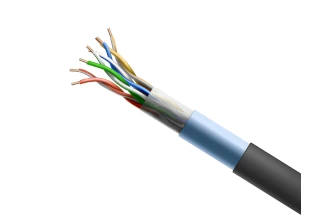
On the other hand, STP cables come with additional shielding around each pair of wires or all the wires as a whole. This extra layer of protection helps reduce the potential for interference and crosstalk from external sources. If your cabling infrastructure is exposed to high EMI or RF interference levels, STP cables provide a more reliable solution.
Why Does Shielding Matter?
Shielding is a barrier to blocking electromagnetic interference that can distort data signals. This is especially important in environments where equipment or devices produce strong electrical fields, such as near large motors, industrial equipment, or high-density data centres. STP cables can offer a more stable and robust connection in these situations.
Example:
Imagine a network installation on a factory floor with machines running all day. UTP cables could experience signal degradation or errors due to interference without shielding. STP cables would handle this better, ensuring cleaner signals and less risk of downtime.
When Should You Choose STP or UTP?
Choose UTP cables when:
Your environment is relatively interference-free.
You're setting up a home or small office network.
Cost-effectiveness is key, as UTP cables tend to be cheaper.
Choose STP cables when:
You're working in an industrial environment with much electromagnetic interference.
You need higher data integrity for large-scale data centres or server rooms.
You want to future-proof your network for high-speed applications that demand cleaner data transmission.
Cost and Installation Considerations
While STP cables provide more protection, they are more expensive and challenging to install. The shielding needs to be properly grounded, which can add to the complexity of the installation process. On the other hand, UTP cables are easier to work with and more budget-friendly.


FAQs
What is the main advantage of using STP over UTP cables?
The main advantage of STP cables is their ability to reduce interference, making them ideal for environments with a lot of electromagnetic or radio frequency interference.
Can UTP cables be used in outdoor installations?
While UTP cables can be used outdoors, they are not recommended for areas with high interference. If you need to run cables in an area with high interference or HA conditions, STP or even optic cables are better options.
Are STP cables more durable than UTP cables?
STP cables are more durable due to their shielding, but this doesn't mean UTP cables aren't sturdy. UTP cables are still quite reliable in the right environments.
Can I mix STP and UTP cables in the same network?
While it's generally not a problem to use both types in the same network, proper grounding when using STP cables is important to avoid potential issues.
What speeds can UTP and STP cables handle?
UTP and STP cables can handle high-speed data transfer, but STP cables perform better in environments with lots of interference. They're ideal for Gigabit Ethernet and 10 Gigabit Ethernet connections in complex setups.
The choice between STP and UTP comes down to your specific needs. If you're setting up a network in a quiet, interference-free environment, UTP cables are your go-to.
However, STP cables are the way to go if your network faces electromagnetic challenges.
So, next time you lay down cables, ask yourself: Is it shielded or unshielded? Your network's performance might depend on it.
However, STP cables are the way to go if your network faces electromagnetic challenges.
So, next time you lay down cables, ask yourself: Is it shielded or unshielded? Your network's performance might depend on it.
Related Products
