
How does an OTDR differ from other fibre testing tools like light source and power meters?
Posted on: 06/02/2025
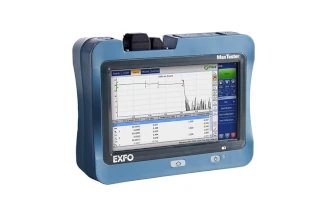
When testing fibre optic cables, an Optical Time Domain Reflectometer (OTDR) stands out from tools like light sources and power meters by doing more than just checking signal strength.
While a light source and power meter measure the overall loss between two ends of a fibre, an OTDR goes further; it maps out the fibre, identifies faults, and estimates distances to issues like breaks, bends, or splices.
Think of it like GPS for your fibre optic cable: instead of just telling you how far you've travelled, it highlights bumps in the road and detours along the way.
While a light source and power meter measure the overall loss between two ends of a fibre, an OTDR goes further; it maps out the fibre, identifies faults, and estimates distances to issues like breaks, bends, or splices.
Think of it like GPS for your fibre optic cable: instead of just telling you how far you've travelled, it highlights bumps in the road and detours along the way.

OTDR vs. Light Source & Power Meter: What's the Difference?
Both tools are essential for fibre testing, but they serve different purposes:
OTDR – The Fibre Detective
It uses light pulses to detect reflections within the fibre.
Identifies faults, bends, splices, and breaks.
Provides a graphical trace of the fibre's performance over distance.
Best for troubleshooting, maintenance, and verifying new installations.
Light Source & Power Meter – The Speedometer & Fuel Gauge
Measures signal loss from one end of the fibre to the other.
Provides an overall assessment of signal quality but doesn't locate specific faults.
Ideal for checking installed fibres for compliance with performance standards.
Why Choose an OTDR?
If you need detailed diagnostics, an OTDR is the way to go. It's beneficial for:
Finding faults quickly – Locate breaks, poor splices, or excessive bends.
Documenting fibre performance – Great for proving quality in new installs.
Predictive maintenance – Identify weak spots before they become major failures.
But if you need a quick pass/fail for a fibre link, a light source and power meter are faster, cheaper, and more straightforward.
When Should You Use Which Tool?
Situation: Testing fibre loss between two points
Best Tool: Light Source & Power Meter
Situation: Identifying the location of faults
Best Tool: OTDR
Situation: Verifying splices & connectors
Best Tool: OTDR
Situation: Routine maintenance checks
Best Tool: Light Source & Power Meter
Situation: Long-distance fibre testing
Best Tool: OTDR


FAQs
What does an OTDR do that a power meter can't?
An OTDR maps out the entire fibre, detecting faults, splices, and bends, whereas a power meter only measures total signal loss between two points.
Is an OTDR more complicated to use than a power meter?
Yes, OTDRs require more expertise to interpret traces correctly, while power meters give simple pass/fail readings.
Can an OTDR replace a light source and power meter?
Not entirely. While an OTDR provides more detail, a power meter is faster for verifying fibre loss in simple installations.
Do I need an OTDR for short fibre runs?
Not always. A power meter is usually sufficient for short cables or patch leads unless you need to detect micro-bends or bad splices.
Can I hire an OTDR instead of buying one?
Yes. At CMW, we offer OTDR hire so you can test fibre without the high upfront cost of buying one.

If a light source and power meter are like a speed gun checking if your car is going fast enough, an OTDR is like a forensic investigator figuring out where the potholes are and who put them there.
Related Products
