

Do I need intumescent sealant around a fire rated panel, and how much?
Posted on: 28/04/2025
The Short Answer: Yes, You Probably Do.
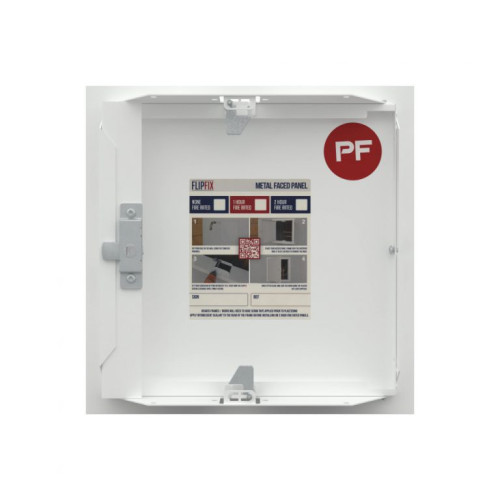
If you're installing a fire-rated metal access panel, then yes, intumescent sealant is typically required around the edges to maintain the integrity of the fire barrier. Why? Because that little gap between the panel frame and the wall or ceiling is where fire, smoke, and toxic gases could sneak through. And trust us, that's not the kind of surprise you want in the middle of an inspection—or worse, a fire.

Why It Matters
Fire-rated panels are tested as part of a complete system. If you alter that system, like leaving the perimeter unsealed, you compromise the rating. Think of it this way: You wouldn't install a fire door and then leave it permanently ajar.
That intumescent sealant is specially formulated to expand under high heat, sealing gaps and keeping the barrier intact for the duration it's rated (30, 60, 90, or even 120 minutes).
But How Much Sealant Do I Need?
It depends on the size and number of panels and the gap between the panel and the surrounding substrate. But as a rough guide:
For a standard 300mm x 300mm panel, one tube (310ml) of intumescent mastic should cover 2–3 panels, depending on bead thickness.
Larger panels or uneven wall surfaces may require more.
You want a continuous bead, around 5mm wide and deep, applied to all sides.
And remember, don't just slap it on like tomato ketchup. Follow the panel manufacturer's fire test evidence or datasheet to the letter.
What Happens If You Skip It?
Skipping the sealant could:
Void the fire rating.
Leads to a failed inspection.
Increase liability in the event of a fire.
Quick Tips
Check the datasheet – different panels and manufacturers have different requirements.
Use a CE-marked or tested sealant for the job.
Keep a few tubes on hand if installing multiple panels across a site.

FAQs
Is fire-rated mastic the same as intumescent sealant?
In many cases, yes. "Fire-rated mastic" and "intumescent sealant" are often used interchangeably, but always check the product spec to be sure it's suitable for passive fire protection.
Can I use regular silicone instead?
No, regular silicone doesn't expand in a fire and won't maintain fire compartmentalisation. Wearing flip-flops on a construction site is dangerous and not regulated.
Do all access panels need intumescent sealant?
Only fire-rated access panels require intumescent sealant. Standard panels used for general access or aesthetic purposes may not.
What tools do I need to apply the sealant?
A standard mastic gun, a sharp trimming knife, and a wet finger or smoothing tool for a neat finish. It's not rocket science, but it is fire science.
How do I know how long the sealant will last?
Check the manufacturer's shelf life, and once applied, inspect periodically. Most quality intumescent sealants have a shelf life of 12 months or more and maintain integrity for years once in place. 
Final Thoughts
So yes, when you're dealing with a fire-rated metal access panel, intumescent sealant isn't just a nice to have; it's a must-have.
It plays a critical role in passive fire protection, helps meet building regulations, and keeps everyone safer. And let's be honest: If you're already going to the effort of cutting neat holes and fitting access panels properly, adding a few minutes for sealant is a no-brainer.
Related Products
