
How do I interpret test results to determine if a cable installation meets TIA/ISO standards?
Posted on: 07/03/2025
Understanding Cable Test Results
So, you've completed your cable installation and run your tests, and now you're staring at a screen full of numbers and graphs from your Fluke DSX-5000 or DSX-8000.
The big question is: does the installation meet TIA/ISO standards? The good news is that most certification testers will give you a straightforward PASS or FAIL, but understanding the details can help you troubleshoot and improve your work.

Key Factors to Check
Wiremap
This ensures that all conductors are correctly terminated. If you see "split pairs" or "miswires," it's time to check your punch-downs and terminations.
Insertion Loss (Attenuation)
This measures signal strength reduction over distance. The higher loss could mean using a poor-quality cable, excessive cable length, or improper terminations.
NEXT (Near-End Crosstalk)
This checks if signals from one pair interfere with another. Poor NEXT values often result from untwisting pairs too much at termination.
Return Loss
Indicates signal reflections caused by impedance mismatches. If your results fail here, check for poor-quality terminations or damaged cable.
Propagation Delay & Delay Skew
This ensures that signals arrive at roughly the same time. Significant variations could indicate different cable types or inconsistencies in the manufacturing process.
Using the Fluke DSX-5000 & DSX-8000 for Compliance
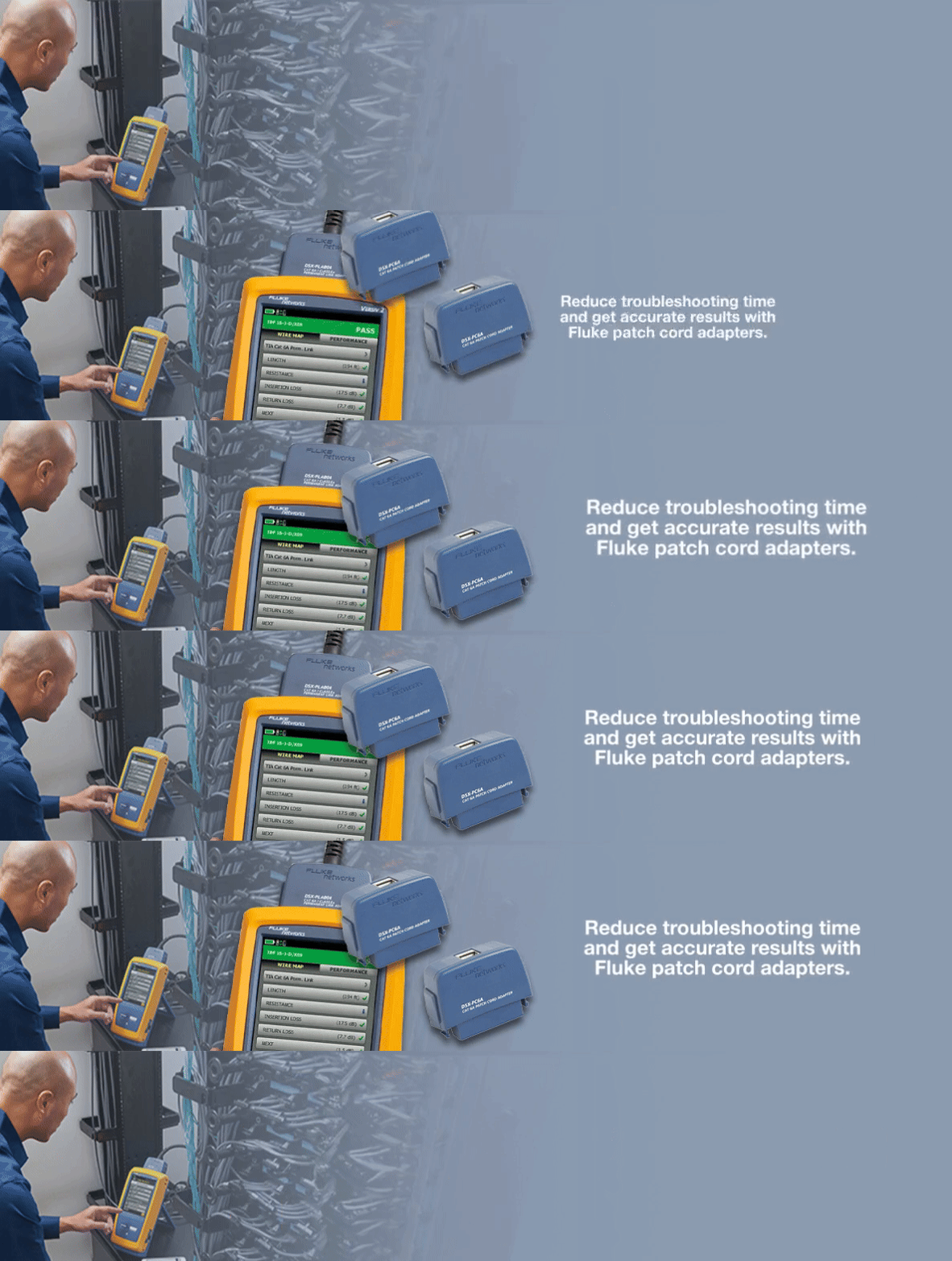
Fluke's DSX series testers are industry favourites because they provide detailed diagnostics, not just a PASS/FAIL result. These testers let you drill down into failing parameters, helping you identify exact problem areas. If your result fails, use the Fault Info feature to pinpoint the cause.
Common Pitfalls and Fixes
High NEXT values? Re-terminate and minimize pair untwisting.
Excessive insertion loss? Shorten cable runs or use higher-grade cabling.
Return loss issues? Check connectors and avoid sharp bends.

FAQs
What's the difference between TIA and ISO standards?
TIA (Telecommunications Industry Association) is widely used in the U.S., while ISO (International Organisation for Standardisation) is a global standard. Both ensure performance but have slight variations in limits.
How often should I calibrate my Fluke tester?
Fluke recommends annual calibration to maintain accuracy and compliance with industry standards.
Can a cable pass overall but fail a specific parameter?
Yes! Some testers allow you to set custom limits, but the cable won't perform reliably if a critical parameter fails.
What's the maximum length for a certified cable run?
For Cat6 and Cat6A, the standard max is 90m for permanent links and 100m, including patch cords.
Does re-testing affect certification results?
No, but frequent failures may indicate poor installation practices that must be addressed.
 onerror="this.style.display='none'" />
Final Thoughts
Interpreting test results is key to ensuring a reliable network. While a PASS is great, digging deeper into the data helps improve quality and prevents costly callbacks.
If you need a Fluke DSX-5000 or DSX-8000, consider hiring one from CMW because owning expensive equipment for occasional use is like buying a Ferrari to drive to the shops.
Related Products
