

What Materials Are Wire Mesh Baskets and Cable Trays Made From?
Posted on: 13/03/2025
When it comes to cable management, choosing the right material for wire mesh baskets and cable trays can make all the difference.
The materials these components are made from dictate their strength, durability, and overall suitability for the job.
Whether you're installing cables in a data centre, an office building, or an industrial setting, understanding the composition of wire mesh baskets and cable trays is key to ensuring the longevity and safety of your installations.
The materials these components are made from dictate their strength, durability, and overall suitability for the job.
Whether you're installing cables in a data centre, an office building, or an industrial setting, understanding the composition of wire mesh baskets and cable trays is key to ensuring the longevity and safety of your installations.
Wire Mesh Basket Tray and Cable Tray Materials:
Wire mesh baskets and cable trays are typically made from materials like steel, aluminium, or stainless steel. Each of these materials has its unique benefits, making them ideal for different types of installations.
Steel (Galvanised or Powder-Coated)
Steel is one of the most common materials used for wire mesh basket trays and cable trays. It is robust, cost-effective, and highly durable. Steel trays are often galvanised, which means they are coated with a layer of zinc to protect them from rust and corrosion. This makes them suitable for installations in environments where moisture or humidity is a concern, such as in basements or outdoor settings.
Steel cable trays are commonly used in industrial environments where durability is crucial, and the trays are often installed to support high-voltage wiring.
Stainless Steel
For more demanding environments, stainless steel is the go-to material. It's highly resistant to corrosion, making it perfect for installations in harsh conditions, such as chemical plants or places with high-temperature variations. Stainless steel wire mesh basket trays are more expensive than their galvanised counterparts, but they offer superior strength and long-term reliability.
In a food processing facility where sanitary conditions are critical, stainless steel cable trays are often the material of choice.
Aluminium
Aluminium is lightweight, non-corrosive, and still strong enough for most applications. It’s an excellent choice for cable management in less demanding environments. Because aluminium wire mesh basket trays are easier to handle and install, they can be a cost-effective solution for data centres or commercial spaces where weight is a consideration.
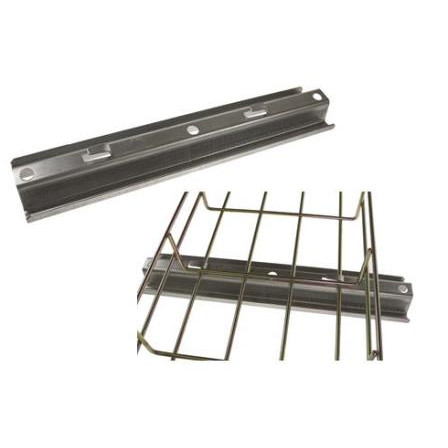
Aluminium trays are commonly used in offices and commercial buildings for low to medium voltage cable management.
Pre-galvanised steel is another option, and its steel that has been galvanised before being fabricated into wire mesh baskets or cable trays. This process provides the material with a durable, rust-resistant coating. It's often used when a balance between cost and performance is needed.
Pre-galvanised cable trays are often seen in standard commercial office buildings and schools, where the environment is relatively mild, but durability is still important.
In some cases, plastic or composite materials are used for lighter-duty cable trays or wire mesh baskets. These materials can be resistant to certain chemicals and are often used in specialized environments like medical facilities, where non-metallic solutions are preferred.
Pre-Galvanised Steel
Pre-galvanised steel is another option, and its steel that has been galvanised before being fabricated into wire mesh baskets or cable trays. This process provides the material with a durable, rust-resistant coating. It's often used when a balance between cost and performance is needed.
Pre-galvanised cable trays are often seen in standard commercial office buildings and schools, where the environment is relatively mild, but durability is still important.
Plastic and Composite Materials
In some cases, plastic or composite materials are used for lighter-duty cable trays or wire mesh baskets. These materials can be resistant to certain chemicals and are often used in specialized environments like medical facilities, where non-metallic solutions are preferred.


FAQ
What is the difference between a wire mesh basket tray and a cable tray?
A wire mesh basket tray is a type of cable tray that consists of a wire mesh design, offering flexibility and easy installation. Cable trays are broader and can be made from different materials, designed to support heavier cable loads in more complex installations.
Can I use wire mesh baskets for outdoor installations?
Yes, if the wire mesh baskets are made from galvanised steel or stainless steel, they can withstand outdoor elements. However, you should ensure they’re rated for external use.
How long do wire mesh baskets last?
The lifespan of a wire mesh basket depends on the material. Steel baskets can last for decades, while aluminium trays might last a bit shorter but still offer significant durability in less harsh environments.
Are there cable trays that don’t require maintenance?
While no material is completely maintenance-free, stainless steel and plastic trays require less maintenance compared to galvanised or pre-galvanised steel, especially in challenging environments.
Can I install wire mesh basket trays myself?
Yes, wire mesh basket trays are relatively easy to install, especially for smaller-scale cable management systems. However, for larger or more complex installations, it’s recommended to hire a professional to ensure safety and compliance with building codes.

Choosing the right material for your wire mesh basket trays and cable trays is more than just a matter of cost.
It’s about ensuring that the materials you use match the specific needs of your installation and environment.
From steel to stainless steel, and even aluminium or plastic, there’s a perfect material for every job, ensuring durability, safety, and long-lasting performance.
It’s about ensuring that the materials you use match the specific needs of your installation and environment.
From steel to stainless steel, and even aluminium or plastic, there’s a perfect material for every job, ensuring durability, safety, and long-lasting performance.
Related Products
