

Why Does My OTDR Show Different Results for the Same Fibre?
Posted on: 28/04/2025
As a data installer or network technician, you've probably experienced this frustrating scenario: your OTDR (Optical Time Domain Reflectometer) gives you different results when testing the same fibre multiple times.
But why does this happen? Several factors can influence your OTDR readings, even when testing the same fibre.
But why does this happen? Several factors can influence your OTDR readings, even when testing the same fibre.

OTDR Settings and Configuration
One of the main reasons your OTDR might show different results is the settings used during testing. OTDRs come with various configurable options, such as pulse width, test wavelengths, and dynamic range, which all impact the accuracy and consistency of the readings.
Pulse width: A longer pulse width results in better sensitivity but might not pinpoint more minor faults or a shorter pulse width.
Test wavelength: Fibre may behave differently depending on whether you're testing at 850nm, 1310nm, or 1550nm. Some fibres are optimised for specific wavelengths so that the results may vary.
Example: If you're testing at 1310nm and switching to 1550nm, the OTDR could show different results because light travels through the fibre at those wavelengths.
Fibre Quality and Splicing Issues
Fibre quality can vary from installation to another, even in the same batch of fibre. Contamination during splicing, fibre bends, or poor fibre preparation can cause inconsistent readings. OTDRs are incredibly sensitive and can highlight slight imperfections in the fibre that might not be visible to the naked eye.
Example: A poorly spliced joint could cause higher loss or backscatter, making the OTDR show a different result each time you test the same fibre.
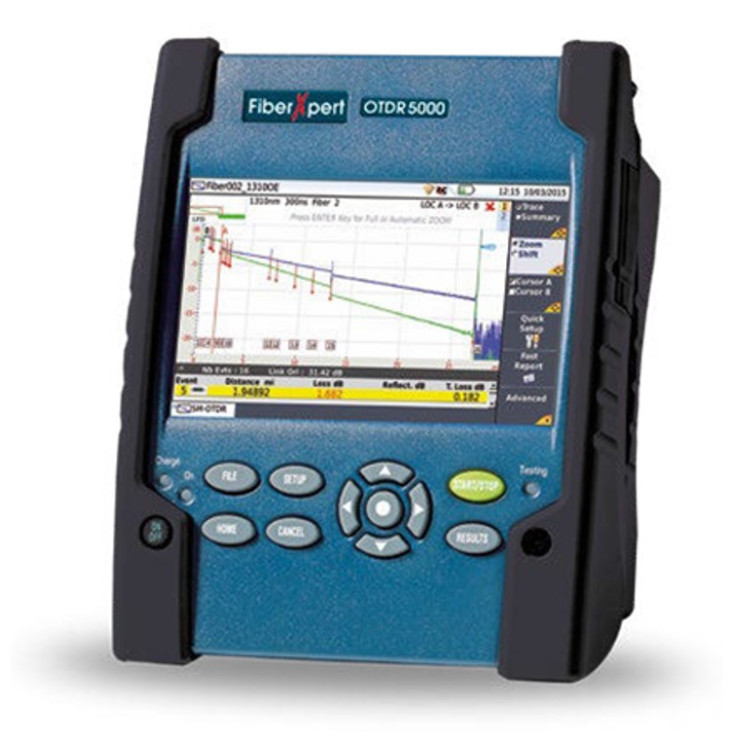
Test Setup and Environment
The environment in which you're testing can also affect the results. Any external noise, such as electromagnetic interference (EMI) or temperature variations, can influence OTDR measurements. OTDRs rely on precise light pulses sent through the fibre; even small changes in external conditions could alter the readings.
Example: Testing fibres in different temperature conditions or with varying levels of electromagnetic interference could give inconsistent results.
OTDR Calibration
Like any precision instrument, your OTDR must be regularly calibrated to ensure accurate results. If the OTDR isn't calibrated correctly, it might show different results for the same fibre each time you test it.
Measurement Resolution
OTDRs have a specified measurement resolution, and the results might differ depending on the resolution setting you use. A higher resolution setting might provide a more detailed analysis, while a lower resolution setting might give you a broader, less detailed view.


FAQs
What causes an OTDR to give inaccurate readings?
Inaccurate OTDR readings can result from improper calibration, incorrect test settings, fibre contamination, or environmental interference such as temperature and EMI.
How can I ensure accurate OTDR results every time?
To get reliable results, always ensure your OTDR is calibrated properly, use consistent test settings, and perform tests under stable environmental conditions.
What is the impact of fibre bends on OTDR results?
Fibre bends can cause increased loss and backscatter, leading to inaccurate OTDR readings. Avoid sharp bends during installation or testing.
Can OTDRs test all types of fibre?
Yes, OTDRs can test single-mode and multimode fibre, though different settings might be needed for each type to get accurate results.
How often should I calibrate my OTDR?
To maintain accurate results, it's recommended that you calibrate your OTDR regularly, ideally once a year or as per the manufacturer's guidelines.

Final Thoughts
If your OTDR shows different results for the same fibre, it's likely due to a combination of factors, such as test settings, fibre quality, environmental conditions, and even the calibration of your OTDR itself.
So, the next time you encounter this issue, check all the settings, ensure the fibre is in top condition, and test in consistent conditions. After all, an OTDR is only as good as the information given.
Related Products
