

Are You Using the Right Wavelength for OTDR Testing? Here’s Why It Matters
Posted on: 25/04/2025
Regarding OTDR testing, choosing the correct wavelength is key to getting accurate and reliable results.
An Optical Time Domain Reflectometer (OTDR) works by sending light pulses into a fibre optic cable and measuring the time it takes for the reflections to return. The wavelength of the light pulse you choose plays a significant role in the accuracy of your measurements, the ability to detect faults and the overall success of your test.
Using the right wavelength ensures that your test results give you a clear picture of the network’s performance, allowing you to identify issues before they become significant problems.
An Optical Time Domain Reflectometer (OTDR) works by sending light pulses into a fibre optic cable and measuring the time it takes for the reflections to return. The wavelength of the light pulse you choose plays a significant role in the accuracy of your measurements, the ability to detect faults and the overall success of your test.
Using the right wavelength ensures that your test results give you a clear picture of the network’s performance, allowing you to identify issues before they become significant problems.

Why Wavelength Matters for OTDR Testing
OTDRs operate across a range of wavelengths, typically in the 850 nm, 1300 nm, and 1550 nm bands. Each wavelength is suited to different types of fibre and testing conditions. The wavelength impacts how light interacts with the fibre and how well the OTDR can detect faults or measure loss.
For example, a 1550 nm wavelength is often preferred for longer-distance testing because it offers lower attenuation and is better for testing longer fibre lengths. On the other hand, shorter wavelengths like 850 nm are more suitable for testing shorter distances or multimode fibres, providing more excellent resolution and the ability to detect more minor faults more clearly.
Common Wavelengths Used in OTDR Testing
850 nm: Typically used for multimode fibre testing. It’s excellent for short-distance testing (up to 2 km), providing a high level of detail.
1300 nm: A common choice for single-mode fibre, offering a good balance between distance and resolution.
1550 nm: The go-to wavelength for long-distance testing in single-mode fibres, with low attenuation and high reflectivity, making it ideal for fault detection over long distances.
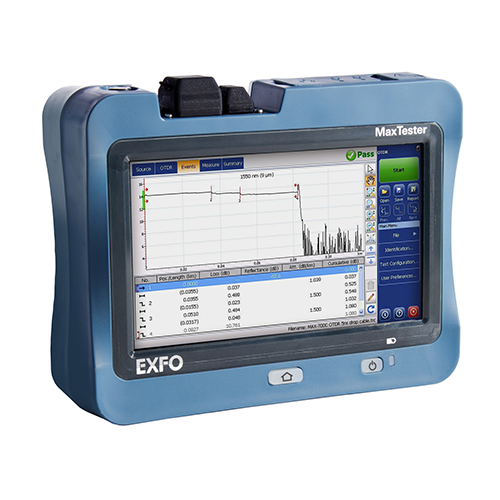
Choosing the Right Wavelength for Your Test
Matching the wavelength with the specific fibre type and testing requirements is essential. Here are a few things to consider:
Type of Fibre: Single-mode and multimode fibres behave differently with varying wavelengths. Single-mode fibres typically perform better at 1310 nm and 1550 nm wavelengths, while multimode fibres excel at shorter wavelengths like 850 nm.
Test Distance: If you’re testing long-distance fibre, you’ll want a wavelength that minimises loss, like the 1550 nm wavelength. For short-distance tests, use 850 nm for better resolution.
Resolution Needs: Shorter wavelengths can offer better resolution, making them better for pinpointing faults in smaller fibre sections.
Wavelength and OTDR Testing Accuracy
The wrong wavelength can lead to inaccurate readings. If you’re testing single-mode fibre with a wavelength suited for multimode, you could miss critical issues like splice loss or fibre bending. To avoid this, ensure your OTDR is calibrated to the appropriate wavelength for the fibre type and the purpose of your test.
<div class="hs-cta-embed hs-cta-simple-placeholder hs-cta-embed-207497909476"
style="max-width:100%; max-height:100%; width:230px;height:72px" data-hubspot-wrapper-cta-id="207497909476">
<a href="https://cta-eu1.hubspot.com/web-interactives/public/v1/track/redirect?encryptedPayload=AVxigLJ%2FIzw7qdMY8mfmg%2FgyLYQI0E1Q2G2vqRLzs432usXfIP%2BCk3flPx%2BzkSnwKBShd%2FmrZNFoTEFFuk%2Bs6FcziOCe5IFJaoS7zKVZGe0yHo0QL6qTD%2F2DshhwwUJBIL5FalQmw5BJ0A1Ta2WIAnNAPaLKqahc2Ggtors70uAkXqjDUOl6Ty0%3D&webInteractiveContentId=207497909476&portalId=143748847" target="_blank" rel="noopener" crossorigin="anonymous">
<img alt="Need Reliable Results? Hire an OTDR Today" loading="lazy" src="https://hubspot-no-cache-eu1-prod.s3.amazonaws.com/cta/default/143748847/interactive-207497909476.png" style="height: 100%; width: 100%; object-fit: fill"
onerror="this.style.display='none'" />
</a>
</div>
style="max-width:100%; max-height:100%; width:230px;height:72px" data-hubspot-wrapper-cta-id="207497909476">
<a href="https://cta-eu1.hubspot.com/web-interactives/public/v1/track/redirect?encryptedPayload=AVxigLJ%2FIzw7qdMY8mfmg%2FgyLYQI0E1Q2G2vqRLzs432usXfIP%2BCk3flPx%2BzkSnwKBShd%2FmrZNFoTEFFuk%2Bs6FcziOCe5IFJaoS7zKVZGe0yHo0QL6qTD%2F2DshhwwUJBIL5FalQmw5BJ0A1Ta2WIAnNAPaLKqahc2Ggtors70uAkXqjDUOl6Ty0%3D&webInteractiveContentId=207497909476&portalId=143748847" target="_blank" rel="noopener" crossorigin="anonymous">
<img alt="Need Reliable Results? Hire an OTDR Today" loading="lazy" src="https://hubspot-no-cache-eu1-prod.s3.amazonaws.com/cta/default/143748847/interactive-207497909476.png" style="height: 100%; width: 100%; object-fit: fill"
onerror="this.style.display='none'" />
</a>
</div>

FAQs
What’s the difference between single-mode and multimode fibre for OTDR testing?
Single-mode fibres are designed for long-distance transmission and work best with longer wavelengths like 1310 nm and 1550 nm. Multimode fibres are used for short-distance communication and work best with shorter wavelengths, like 850 nm, for better resolution.
Can I use one wavelength for all types of OTDR testing?
While it might be tempting, it is not recommended to use a single wavelength for all your OTDR testing. Each wavelength is optimised for different fibre types and distances, and using the wrong one could lead to inaccurate results.
How does the wavelength impact OTDR testing results?
The wavelength affects how light interacts with the fibre. A wavelength that is too short may provide better resolution but struggle with longer distances, while a longer wavelength might provide lower attenuation and better distance testing but not detect fine details.
Which wavelength should I use for longer fibre runs?
1550 nm is typically the best choice for long-distance testing due to its low attenuation, which makes it ideal for fibre runs over several kilometres.
How can I ensure I’m using the right wavelength for my OTDR test?
Consult your fibre specifications and match the OTDR wavelength to the fibre type and test distance. Ensure your OTDR is configured to the correct settings to maximise accuracy and reliability.
<div class="hs-cta-embed hs-cta-simple-placeholder hs-cta-embed-204423334079"
style="max-width:100%; max-height:100%; width:230px;height:72px" data-hubspot-wrapper-cta-id="204423334079">
<a href="https://cta-eu1.hubspot.com/web-interactives/public/v1/track/redirect?encryptedPayload=AVxigLLHGKz8ndS0XY8YXkxu8t7spH13GUi%2BtTUZaa38BgSEk3IIwQC9TW6JVGw06e26PyhSBz2BA5W4RhL70Vf%2FY%2BgTmRaXI7k3ewuNgiw10bRL7%2B0Lh3CZ1Hg2eDeKOz670pVLjWKyNVqD%2BdpPjAUBI9k6r%2FIb7IN4MSRzty6BL7Ay&webInteractiveContentId=204423334079&portalId=143748847" target="_blank" rel="noopener" crossorigin="anonymous">
<img alt="Learn More About Our Equipment Hire Service" loading="lazy" src="https://hubspot-no-cache-eu1-prod.s3.amazonaws.com/cta/default/143748847/interactive-204423334079.png" style="height: 100%; width: 100%; object-fit: fill"
onerror="this.style.display='none'" />
</a>
</div>
style="max-width:100%; max-height:100%; width:230px;height:72px" data-hubspot-wrapper-cta-id="204423334079">
<a href="https://cta-eu1.hubspot.com/web-interactives/public/v1/track/redirect?encryptedPayload=AVxigLLHGKz8ndS0XY8YXkxu8t7spH13GUi%2BtTUZaa38BgSEk3IIwQC9TW6JVGw06e26PyhSBz2BA5W4RhL70Vf%2FY%2BgTmRaXI7k3ewuNgiw10bRL7%2B0Lh3CZ1Hg2eDeKOz670pVLjWKyNVqD%2BdpPjAUBI9k6r%2FIb7IN4MSRzty6BL7Ay&webInteractiveContentId=204423334079&portalId=143748847" target="_blank" rel="noopener" crossorigin="anonymous">
<img alt="Learn More About Our Equipment Hire Service" loading="lazy" src="https://hubspot-no-cache-eu1-prod.s3.amazonaws.com/cta/default/143748847/interactive-204423334079.png" style="height: 100%; width: 100%; object-fit: fill"
onerror="this.style.display='none'" />
</a>
</div>
FAQs
What’s the difference between single-mode and multimode fibre for OTDR testing?
Single-mode fibres are designed for long-distance transmission and work best with longer wavelengths like 1310 nm and 1550 nm. Multimode fibres are used for short-distance communication and work best with shorter wavelengths, like 850 nm, for better resolution.
Can I use one wavelength for all types of OTDR testing?
While it might be tempting, it is not recommended to use a single wavelength for all your OTDR testing. Each wavelength is optimised for different fibre types and distances, and using the wrong one could lead to inaccurate results.
How does the wavelength impact OTDR testing results?
The wavelength affects how light interacts with the fibre. A wavelength that is too short may provide better resolution but struggle with longer distances, while a longer wavelength might provide lower attenuation and better distance testing but not detect fine details.
Which wavelength should I use for longer fibre runs?
1550 nm is typically the best choice for long-distance testing due to its low attenuation, which makes it ideal for fibre runs over several kilometres.
How can I ensure I’m using the right wavelength for my OTDR test?
Consult your fibre specifications and match the OTDR wavelength to the fibre type and test distance. Ensure your OTDR is configured to the correct settings to maximise accuracy and reliability.
Related Products
