

What is the Difference Between a Fusion Splice and a Mechanical Splice?
Posted on: 03/03/2025
When joining optical fibres, you have two main choices: fusion splicing and mechanical splicing. The key difference? A fusion splice permanently fuses two fibre ends together using heat, while a mechanical splice aligns and holds the fibres in place with a special connector; no heat is required. Fusion splicing is your best bet for the strongest, lowest-loss connection. But mechanical splicing does the job without breaking out the fancy equipment if you need a quick and easy fix.

Fusion Splicing: The Gold Standard
Fusion splicing is the preferred method for high-performance fibre optic connections. It involves:
Stripping, cleaning, and precisely cleaving the fibre ends.
Using a fusion splicer to align and fuse them with an electric arc
Protecting the joint with a splice sleeve for durability
Why Choose Fusion Splicing?
Lower insertion loss – The fused connection minimises signal loss.
Stronger and more reliable – The bond is nearly as strong as the fibre.
Long-term stability – No concerns about misalignment over time.

Example: If you're working on a fibre-to-the-home (FTTH) installation where long-term reliability is crucial, fusion splicing is the best choice.
Mechanical splicing is a faster, less equipment-heavy alternative. It works by:
Aligning two fibre ends in a pre-manufactured sleeve.
Using index matching gel to reduce signal loss
Clamping the fibres in place (no heat required!)
Why Choose Mechanical Splicing?
Faster and easier – No need for expensive equipment or training.
Suitable for temporary fixes – Ideal for emergency repairs or testing.
Lower upfront costs – Mechanical splices are cheaper initially.
Example: If you're an electrician working on a short fibre run inside a building, a mechanical splice can save time without requiring a complete fusion splicing setup.
For permanent, high-performance connections: Fusion splice.
For quick, temporary, or budget-friendly fixes: Mechanical splice.
Mechanical Splicing: Quick and Convenient
Mechanical splicing is a faster, less equipment-heavy alternative. It works by:
Aligning two fibre ends in a pre-manufactured sleeve.
Using index matching gel to reduce signal loss
Clamping the fibres in place (no heat required!)
Why Choose Mechanical Splicing?
Faster and easier – No need for expensive equipment or training.
Suitable for temporary fixes – Ideal for emergency repairs or testing.
Lower upfront costs – Mechanical splices are cheaper initially.
Example: If you're an electrician working on a short fibre run inside a building, a mechanical splice can save time without requiring a complete fusion splicing setup.
Which One Should You Use?
For permanent, high-performance connections: Fusion splice.
For quick, temporary, or budget-friendly fixes: Mechanical splice.

FAQs
Is fusion splicing stronger than mechanical splicing?
Yes. Fusion splicing creates a seamless bond between fibre ends, making it stronger and more reliable than a mechanical splice.
Do I need a fusion splicer to do fusion splicing?
Absolutely. A fusion splicer is a must-have tool for properly heating and joining the fibres.
Can I use mechanical splicing for long-distance fibre runs?
It is not recommended. Mechanical splices have a higher signal loss and are better suited for short, indoor applications or quick fixes.
Which method is more cost-effective?
Mechanical splicing has a lower initial cost, but fusion splicing provides better long-term performance, making it more cost-effective.
Can I rent a fusion splicer instead of buying one?
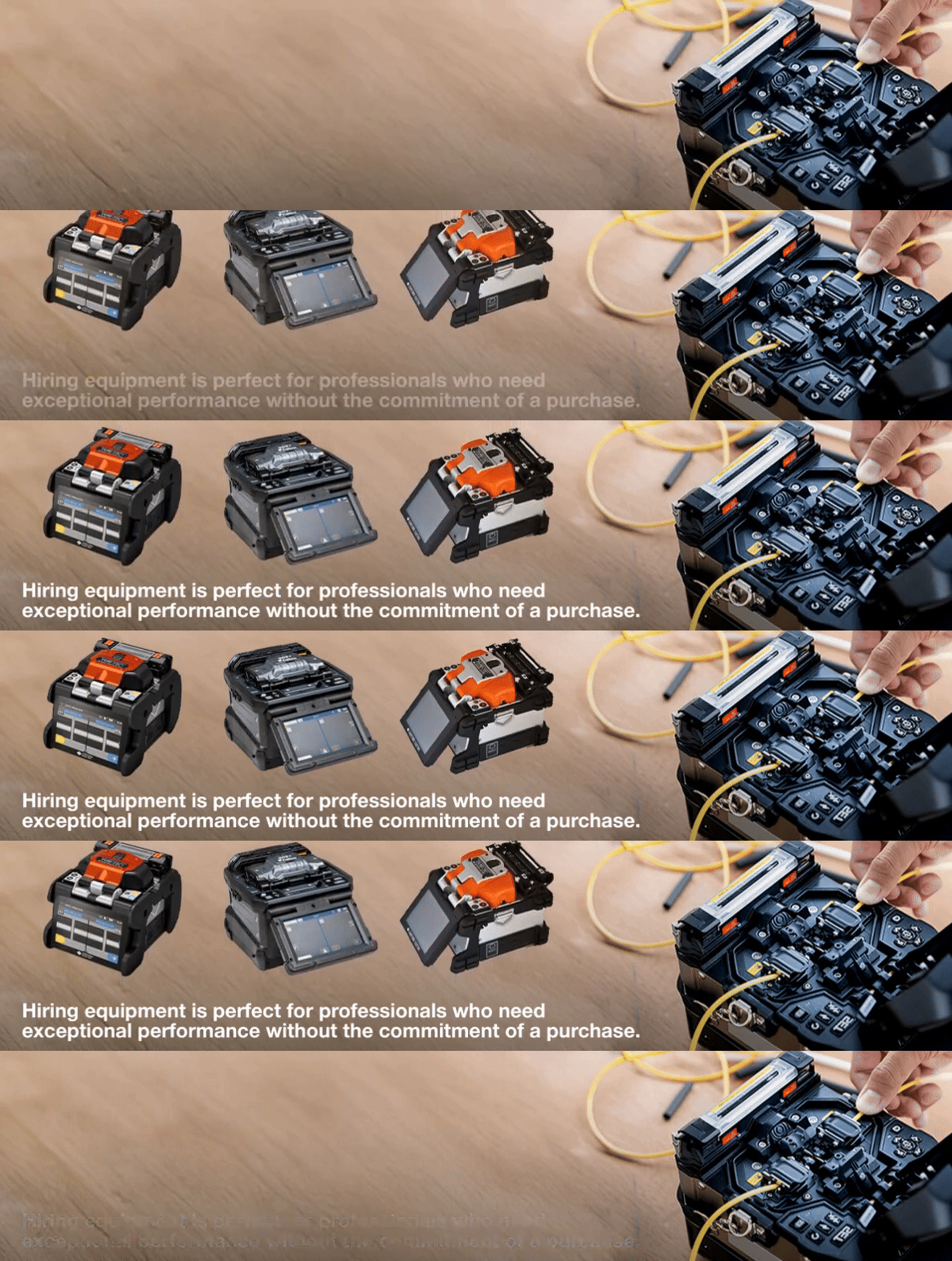
Yes. At CMW Ltd, we offer fusion splicer rentals, so you can get high-quality splicing without the upfront investment.
Final Thought
Think of fusion splicing as the strong and seamless welding of two metal rods together. Meanwhile, a mechanical splice is adequate but not as durable as superglue.
Related Products
