

Why Are My Cables Sagging in a Wire Mesh Basket or Cable Tray?
Posted on: 12/05/2025
Let’s get straight to it, why are your cables sagging in a wire mesh basket or cable tray?
It usually comes down to one (or a combo) of the following: lack of proper support spacing, overloading the tray, incorrect installation, or cables simply being too loose.
In short, poor cable management is the culprit, and your network cabling infrastructure deserves better.
While the phrase “cable support systems” might not sound thrilling, there’s something oddly satisfying about a clean, well-routed tray.
It usually comes down to one (or a combo) of the following: lack of proper support spacing, overloading the tray, incorrect installation, or cables simply being too loose.
In short, poor cable management is the culprit, and your network cabling infrastructure deserves better.
While the phrase “cable support systems” might not sound thrilling, there’s something oddly satisfying about a clean, well-routed tray.

Common Causes of Cable Sagging
Support Spacing Is Too Wide
If your cable tray or wire mesh basket has long spans between supports, gravity’s going to have its say. Cables aren’t weightless, and without adequate support, they will droop.
Pro Tip:
Follow manufacturer recommendations – typically support every 1.5 to 2 metres for standard wire mesh baskets.
Overloading
Too many cables in one tray? That’s a recipe for sagging and overheating – a double whammy.
Always calculate cable load capacity before installation.
Consider separate containment routes for power and data where possible.
Lack of Tie-downs or Fasteners
Think of your tray like a motorway. Without lane discipline (aka cable ties, clips, or Velcro straps), it’s chaos.
CMW tip: Use Velcro for data cables to prevent damage and make maintenance easier.
Improper Cable Placement
Loose, unorganised cables tend to shift and clump together, causing uneven weight distribution and sag.
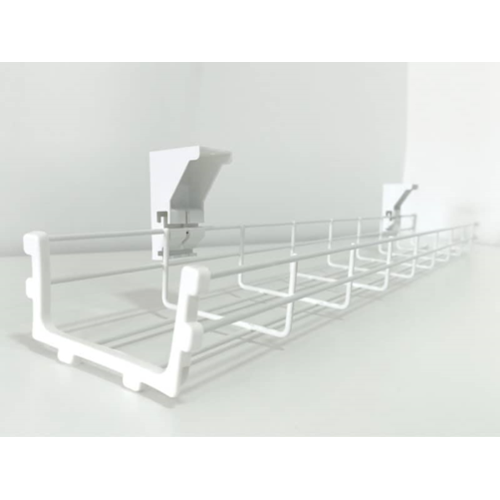
Better Cable Management Starts Here
A few smart changes to your cable routing solutions can transform your cable containment:
Install divider strips to separate different cable types.
Use tray covers in areas with environmental exposure.
Add mid-span supports for longer runs or heavier cables.
Label your cables (you’ll thank yourself later).
And if your cable tray currently looks more like a spaghetti disaster than a structured support system… well, it’s time to give CMW a call.
Let’s lighten the load (literally)
We once heard someone say, "Gravity is just a theory.” Tell that to a sagging Cat6 cable.
Even the most expensive electrical cable tray won’t work magic if your cable management systems are left to chance.


FAQs
How often should cable trays be supported?
Typically every 1.5 to 2 metres but always follow the manufacturer's specifications based on your tray and cable type.
Can I use wire mesh baskets for power and data cables together?
Not ideal. It's best to separate them using dividers or separate trays to prevent electromagnetic interference (EMI).
Are there weight limits for wire mesh baskets?
Yes, each basket type has a max load capacity. Overloading can lead to sagging, deformation, or failure.
What’s the best way to secure cables inside a tray?
Use cable ties (preferably Velcro for data cables), cable clamps, or specially designed fixings for trays or baskets.
Do sagging cables affect performance?
They can, especially in data cabling. Excessive bends, strain, or compression from sagging can impact signal quality over time.
Final Thoughts
Sagging cables aren’t just untidy, they could be compromising your whole system. At CMW, we help installers, electricians, and end users alike take back control of their cable routing solutions with trusted cable support systems and expert advice.
Whether it’s a single wire mesh basket or a full-blown electrical cable tray overhaul, we’re here to make your installs smarter, safer, and future proof.
Related Products
