

Why is an OTDR important for fibre optic testing?
Posted on: 05/02/2025
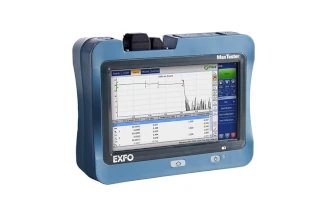
Regarding fibre optic testing, an Optical Time Domain Reflectometer (OTDR) is an essential tool that helps pinpoint faults, measure cable length, and assess overall network performance.
Unlike basic power metres, an OTDR doesn’t just tell you if your fibre link is working; it shows you where the issues are, whether it’s a break, splice loss, or a bad connector.
For anyone installing or maintaining fibre networks, having an OTDR in your toolkit is like having an X-ray vision for your cables.
Unlike basic power metres, an OTDR doesn’t just tell you if your fibre link is working; it shows you where the issues are, whether it’s a break, splice loss, or a bad connector.
For anyone installing or maintaining fibre networks, having an OTDR in your toolkit is like having an X-ray vision for your cables.
What Does an OTDR Do?
An OTDR sends a high-intensity light pulse through the fibre and measures the reflected signal. This process helps:
Identify breaks or faults – Know precisely where the issue is, rather than guessing.
Measure loss at splices and connectors – Ensure your network is up to standard.
Verify cable length – Useful for installations and troubleshooting.
Detect bending and stress points – Prevent long-term damage before it becomes a major failure.
Why Is This Important?
Let’s say a fibre network goes down unexpectedly. Without an OTDR, you’d be left manually inspecting cable kilometres; good luck. With an OTDR, you can pinpoint the fault within a few metres, saving work hours (or even days).
For fibre installers, electricians, and network technicians, time is money. Whether verifying a new install or diagnosing an outage, an OTDR eliminates the guesswork, improves efficiency, and ensures your network performs at its best.
When Should You Use an OTDR?
You don’t need an OTDR for every job, but it’s essential in situations like:
Fibre network installations – Ensuring proper splicing and connections before handover.
Routine maintenance – Catching issues before they cause downtime.
Troubleshooting faults – Finding breaks quickly instead of relying on trial and error.
Documenting test results – Proof of a sound installation for clients or compliance needs.
Buying vs. Hiring an OTDR
An OTDR is a specialised (and expensive) piece of equipment, which makes hiring a smart option for many professionals.
At CMW, we offer OTDR rentals, allowing data installers and electricians to access high-quality testing equipment without the hefty upfront cost.
Do you need an OTDR for a one-off job? Renting from CMW means you get top-tier equipment without breaking the bank.

FAQs
What is an OTDR used for?
An Optical Time Domain Reflectometer (OTDR) is used to test fibre optic cables by detecting breaks, measuring signal loss, and verifying splices and connectors.
How does an OTDR work?
An OTDR sends light pulses down the fibre and measures the reflections to map out the cable’s length, faults, and overall quality.
Do I need an OTDR for every fibre installation?
Not always, but it’s highly recommended for new installations, troubleshooting faults, and ensuring compliance with industry standards.
Is it better to buy or hire an OTDR?
If you use an OTDR frequently, buying might make sense. However, for occasional jobs, hiring from CMW is a cost-effective alternative.
Can an OTDR detect all types of fibre issues?
OTDRs are excellent at identifying breaks, loss points, and splicing issues, but they may not detect micro bends or certain types of attenuation.

Final Thoughts
Think of an OTDR as your fibre network’s detective. It finds the problems, tells you exactly where they are, and helps keep everything running smoothly. Whether installing, maintaining, or troubleshooting fibre, having access to an OTDR can make all the difference.
And let’s be honest: Guessing where a fibre break is without one is like playing hide-and-seek with an invisible opponent.
Related Products
