

How do I choose between fibre optic and copper cabling?
Posted on: 04/04/2025
Fibre Optic vs Copper Cabling: What’s Best for Your Network?
The short answer? It depends.
Both fibre optic and copper cabling have strengths, and the right choice depends on factors like speed, distance, budget, and the environment of your installation.
Fibre optic cables excel at long-distance, high-speed data transmission, while copper cables are often more budget-friendly and reliable for shorter runs.
So, how do you decide? Let’s break it down.

Speed & Bandwidth: Who’s the Fastest?
If speed is your top priority, fibre optic wins hands down. Fibre can transmit data at 10 Gbps and beyond speeds, with significantly higher bandwidth than copper. While improving with technologies like Cat6A, copper cables are still limited to shorter distances at high speeds.
Fibre: Can handle massive data loads over long distances without degradation.
Copper: Works well for lower-speed applications and shorter distances.
Fibre is your best bet if you run an extensive network with heavy data traffic. Copper may be enough if you need cabling for a smaller office or residential setup.
Distance: How Far Can Your Signal Travel?
Copper cables rely on electrical signals, which degrade over distance. Fibre, however, uses light signals, which travel much farther with minimal loss.
Fibre: Can transmit data up to 40 km with single-mode fibre (or even more with advanced solutions).
Copper: Typically limited to 100 meters before requiring a signal boost.
Fibre is the way to go if your network needs to cover long distances, such as data centres, large buildings, or industrial sites.
Durability & Interference: Who Stands Stronger?
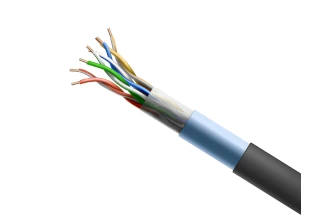
Copper cables are prone to electromagnetic interference (EMI), affecting performance. They are also more vulnerable to corrosion and physical damage. Fibre optic cables, on the other hand, are immune to EMI and can handle harsher environments.
Fibre: Resistant to interference, weather conditions, and signal degradation.
Copper: Can suffer from interference and may need shielding to minimise disruption.
Fibre is the safer choice for high-interference areas like factories, hospitals, or areas with heavy electrical equipment.
Installation & Cost: What’s More Budget-Friendly?
Copper cabling is typically cheaper to install and easier to work with, making it a popular choice for many businesses. Fibre optic cabling, while more expensive upfront, can offer lower maintenance costs and more excellent long-term value.
Copper: Lower upfront cost but may require more maintenance and upgrades.
Fibre: Higher initial investment but offers better long-term performance and scalability.
If your budget is tight and your installation is relatively simple, copper might be the way to go. But if you’re thinking long-term, fibre could save you money.

FAQs
Can I mix fibre and copper in my network?
Yes, many networks use a combination of both, depending on the needs of different areas—for example, fibre is used for backbone connections, and copper is used for shorter internal runs.
Is fibre optic cabling harder to install than copper?
Fibre requires more precision during installation and specialised equipment for splicing and testing. Copper is easier to install and terminate but needs more space for cable runs.
Which cable type is better for PoE (Power over Ethernet)?
Copper cabling (such as Cat6A) is the best choice for PoE, as fibre does not transmit power—only data.
Does fibre optic cable last longer than copper?
Yes, fibre optic cables have a longer lifespan and are less susceptible to degradation over time than copper cables.
Will upgrading to fibre improve my internet speed?
It depends on your ISP and equipment. Fibre supports higher speeds, but your internet speed depends on your provider’s service.

Final Thoughts
Choosing between fibre optic and copper cabling depends on your specific needs. If you need speed, long-distance transmission, and interference resistance, fibre is the clear winner. However, if you’re looking for a cost-effective, easy-to-install solution for shorter runs, copper is still a solid choice.
At CMW, we supply fibre and copper solutions, as well as equipment hire for testing and installation. Need help deciding? Contact our team, and we’ll find the best option for your cabling infrastructure.
Related Products
