

How do I troubleshoot cable faults in my infrastructure?
Posted on: 13/05/2025
When your network’s misbehaving, cables are often the silent culprits. The short answer to "How do I troubleshoot cable faults in my infrastructure?" is this: use a combination of visual inspection, testing equipment (like cable testers or OTDRs), and structured process-of-elimination to locate and resolve the fault.
Whether you’re dealing with structured cabling for a new build, patching up a flaky network cabling connection, or managing fibre optic backbones, fault-finding is both a science and an art.
Whether you’re dealing with structured cabling for a new build, patching up a flaky network cabling connection, or managing fibre optic backbones, fault-finding is both a science and an art.

Start with the Basics
Before pulling out the heavy-duty testers, start with the simple stuff:
Check connectors and ports – Are they seated properly? Any visible damage?
Look for physical damage – Has a copper cable been crushed under office furniture? Has a fibre cable taken a sharp bend or been pinched in a cabinet door?
Label everything – If your cabling infrastructure resembles spaghetti, start by identifying what goes where.
Tools of the Trade
The right tools can save hours (and your sanity). Some essential ones:
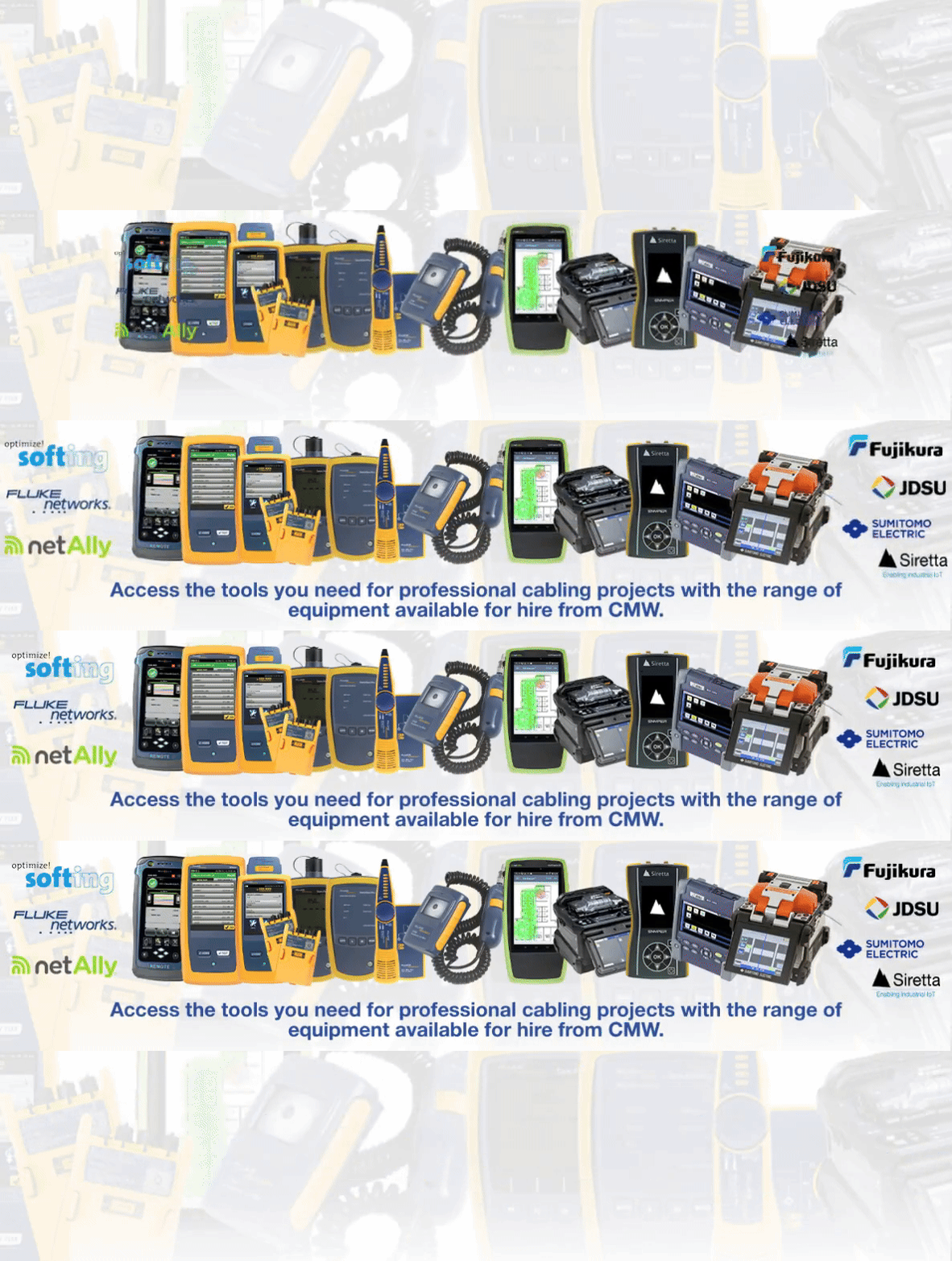
Cable testers – For copper cabling, testers like the Softing CableMaster check continuity, length, and shorts.
OTDRs (Time Domain Reflectometers) – Pinpoint faults in long copper runs.
OTDRs (Optical Time Domain Reflectometers) – For fibre optic cabling, OTDRs locate bends, breaks, or splices gone rogue.
Tone generators and probes – Ideal for low-voltage cabling where tracing can be tricky.
Don't Forget the Standards
Check your installation against standards like TIA/EIA-568 or ISO/IEC 11801. If the job doesn’t meet spec, there’s a good chance your fault lies in poor workmanship, poor planning—or both.
When in Doubt, Divide and Conquer
Troubleshooting structured cabling is all about isolation:
Swap out patch leads
Try a known-good device
Test from the patch panel to the endpoint
Segment your system to narrow down the fault
It’s like detective work... only with more cable ties.

FAQs
What’s the most common cause of cabling faults?
Poor terminations and physical damage top the list. Always check connectors, crimps, and bends first.
Can I troubleshoot fibre optic faults myself?
Yes, with the right tools. OTDRs and visual fault locators are your friends—but if it feels overwhelming, hiring the gear (and maybe a tech) is a smart move.
How can I tell if the issue is with the cable or the device?
Swap the device with a known-working one. If the problem persists, it’s probably the cable.
Is it better to test with basic or advanced equipment?
Basic testers work for continuity and simple checks. Advanced testers (available to hire from CMW) offer detailed diagnostics, which can be essential for complex faults.
Can I hire cable testers and OTDRs from CMW?
Absolutely. Our hire service is ideal for installers and electricians who need pro-grade test equipment without the big upfront cost.

Wrapping Up
Troubleshooting faults in your cabling infrastructure doesn’t have to feel like chasing ghosts through the walls.
With a bit of logic, the right tools, and maybe a cuppa (or a curse or two), you can locate and resolve most issues quickly.
Related Products
