

How Can I Ensure My OTDR Tests Meet Industry Standards?
Posted on: 07/05/2025
Ensuring that your OTDR (Optical Time Domain Reflectometer) tests meet industry standards is crucial for delivering accurate and reliable results.
You can confidently ensure your tests align with industry expectations by following best practices, regularly calibrating your equipment, and adhering to recognised testing protocols.
OTDR testing is essential in data and voice networking installations. It helps identify faults, splices, and overall signal loss in fibre optic cables.
When your OTDR tests meet industry standards, you can save time, reduce errors, and ensure quality service. Here's how you can make sure your OTDR tests meet these standards:
You can confidently ensure your tests align with industry expectations by following best practices, regularly calibrating your equipment, and adhering to recognised testing protocols.
OTDR testing is essential in data and voice networking installations. It helps identify faults, splices, and overall signal loss in fibre optic cables.
When your OTDR tests meet industry standards, you can save time, reduce errors, and ensure quality service. Here's how you can make sure your OTDR tests meet these standards:

Understand the Standards You're Working With
Before diving into testing, it's vital to understand the specific industry standards that apply to your OTDR tests. Organisations such as the International Telecommunication Union (ITU) and the Telecommunications Industry Association (TIA) typically outline the key standards. These standards provide guidelines on test methods, equipment calibration, and acceptable test result ranges. Familiarising yourself with these standards will help ensure you're on the right track.
For instance, the ITU-T G.652 standard focuses on fibre optic cables used in telecommunications, while the TIA-568 standard outlines specifications for commercial building cabling systems. Knowing which standard applies to your tests will help you deliver accurate and compliant results with industry requirements.
Proper Calibration of OTDR Equipment
Calibration is critical to ensuring your OTDR is operating at peak performance. A well-calibrated OTDR will provide accurate readings, which are crucial for making informed decisions about the integrity of fibre optic cables. Perform regular calibration checks, ideally according to the manufacturer's guidelines. If unsure, contact a trusted supplier like CMW, who can help with calibration or recommend equipment for hire.
Choose the Right Test Parameters
When conducting OTDR tests, the test parameters (like pulse width, range, and resolution) must align with your project's specific conditions. For example, a higher pulse width may be required for longer distances, while shorter pulse widths are used for shorter cables or more precise measurements. Setting the correct parameters ensures you capture the right data and avoid inaccurate results.
Use the Right OTDR Model for Your Project
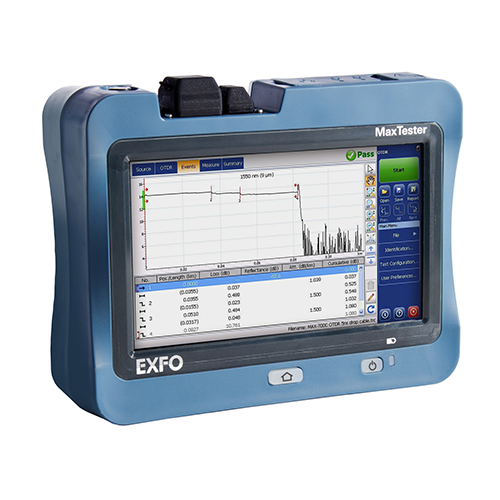
Not all OTDRS are created equal. Depending on the cable type (single-mode or multi-mode) and the fibre length, you may need to choose a model with specific features. For example, high-performance OTDRS may be necessary for long-distance cables, while compact models are ideal for quick testing in tight spaces. Work with a supplier that understands the variety of OTDRS available and can help you select the best option for your project.
Document and Analyse Your Results
Once you've completed the OTDR test, it's time to interpret the results. The OTDR will generate a trace showing faults, splices, and overall attenuation locations. It's important to carefully analyse and compare these traces to industry standards to ensure the fibre meets performance requirements. Accurate documentation is key to providing clear insights to your clients.


FAQs
What is an OTDR, and why is it important?
An OTDR (Optical Time Domain Reflectometer) is a device used to test fibre optic cables. It helps identify faults, splices, and signal loss by sending light pulses through the cable and measuring the reflected signals. It's vital for ensuring high-quality fibre installations.
How do I calibrate my OTDR?
Calibration involves adjusting the OTDR's internal settings to ensure it accurately measures the optical signals. This can usually be done with a calibration kit or by following the manufacturer's instructions. If you're unsure, consider hiring a calibrated OTDR for your tests.
What is the ideal pulse width for an OTDR test?
The ideal pulse width depends on the length of the cable being tested. Longer cables typically require longer pulse widths to ensure accurate results, while shorter pulse widths offer more precision for shorter cable lengths.
Can I hire an OTDR for my project?
Yes! At CMW, we offer equipment hiring services, including OTDRS. This is an excellent option if you need an OTDR for a short-term project without the cost of purchasing one outright.
How often should I perform OTDR tests?
It's recommended to perform OTDR tests at key stages of a project, such as after installation or before final inspection. Regular testing ensures that the fibre optic network remains reliable and free from issues. 
Final Thoughts
Meeting industry standards for OTDR tests involves understanding the right protocols, calibrating your equipment, selecting the appropriate OTDR, and properly analysing your results.
Following these steps will guarantee more reliable test outcomes and ensure that your network installations meet the highest quality benchmarks.
Need an OTDR for your next project? CMW can help with everything from guidance to equipment rentals. Call us, and we'll help you test your cables like a pro.
Related Products
