
How Do I Reduce Noise and Improve the Accuracy of My Measurements?
Posted on: 31/03/2025
When working with an Optical Time Domain Reflectometer (OTDR), achieving accurate measurements and reducing noise is essential for precise testing and diagnostics. Noise can significantly interfere with your measurements, making it harder to get reliable results. So, how can you reduce this noise and improve your readings?
It all comes down to key strategies and tools that can make a huge difference.
It all comes down to key strategies and tools that can make a huge difference.
Use the Right Launch and Receive Cables
First, ensure you're using the correct launch and receive cables with your OTDR. These cables act as a buffer between your OTDR and the fibre under test, helping to avoid reflections that can introduce noise into your readings. Without these, you risk creating erroneous data due to the "dead zone" or "reflection zone" often occurring at the fibre ends. Choose cables designed for your OTDR model to ensure compatibility and optimal performance.
Proper Testing Procedure
Another critical factor in minimising noise is following proper testing procedures. This includes ensuring that your fibre optic cables are properly cleaned and free from dust or contaminants that could affect the readings. When using an OTDR, ensure you're testing in the right conditions—avoid windy areas or environments with high electromagnetic interference (EMI), as these can impact accuracy.
Adjust Your OTDR Settings
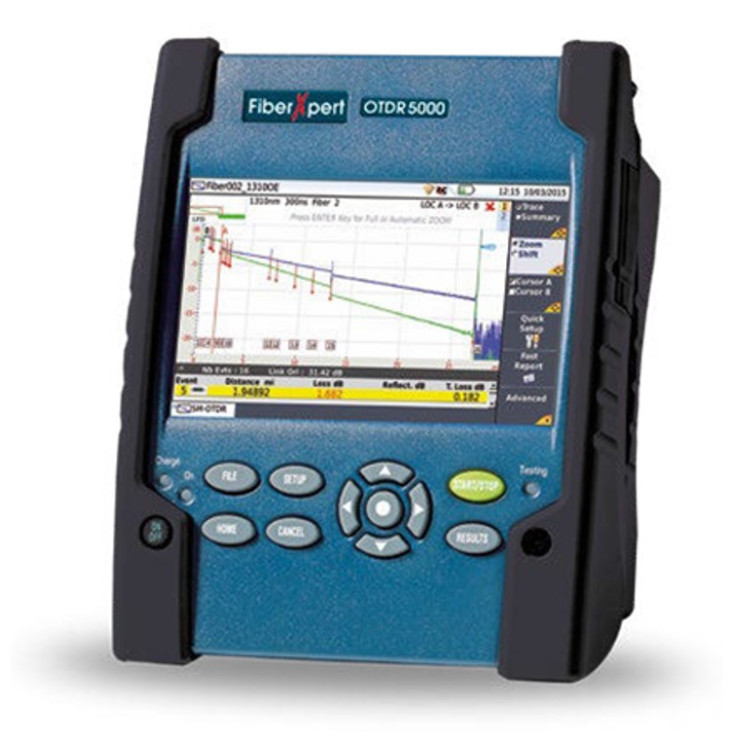
Sometimes, reducing noise is as simple as adjusting your OTDR settings. Many OTDRs offer customisable settings like pulse width and averaging options. By changing these settings, you can optimise the signal strength and improve the clarity of your results. For example, using a more extended pulse width might help improve measurement accuracy on longer fibre links, while averaging the results over several scans can help smooth out noise.
Check for Proper Fibre Installation
Poor fibre installation can also lead to noise and inaccurate readings. Ensure that your fibres are installed correctly and that there are no kinks, bends, or excessive tension. These physical factors can distort the signal and cause errors in your OTDR readings. A well-installed fibre will help maintain signal integrity and accuracy.
Perform Regular Maintenance
Lastly, regular OTDR and associated cable maintenance are key to keeping things running smoothly. Check for wear and tear, especially on your launch and receive cables, and replace any damaged parts immediately. Regular calibration and testing will also help ensure your OTDR works at its best.

FAQs
Why do I need to launch and receive cables for my OTDR testing?
Launch and receive cables help eliminate the "dead zone" in OTDR readings, which can occur due to reflections at the fibre's ends. These cables improve the accuracy of your measurements by providing a clean signal for the OTDR to analyse.
How can I reduce noise in my OTDR measurements?
You can reduce noise by ensuring proper fibre cleaning, selecting the right cables, adjusting OTDR settings, and testing in the right environment. Regular maintenance of your equipment also plays a crucial role.
What is the "dead zone" in OTDR testing?
The "dead zone" is the area at the beginning of the fibre where reflections can occur, leading to inaccurate measurements. Launch cables help eliminate this issue by providing a buffer zone for the OTDR.
Can environmental factors affect OTDR readings?
Environmental factors like wind, moisture, and electromagnetic interference can introduce noise and distort measurements. It's essential to test in controlled environments to ensure accurate results.
How often should I calibrate my OTDR?
Calibration of your OTDR is a good practice, especially if you notice any discrepancies in your measurements. Calibration ensures that your OTDR remains accurate over time.

By following these steps and paying attention to the details, you can significantly reduce noise and improve the accuracy of your OTDR measurements. Remember, using the right cables, following best practices, and maintaining your equipment are key to getting reliable and precise data. With a bit of care, your OTDR will deliver the results you need with minimal fuss.
Is your OTDR set up correctly? If not, let us know if you need further advice on optimising your measurements for even better results.
Is your OTDR set up correctly? If not, let us know if you need further advice on optimising your measurements for even better results.
Related Products
