

What type of bracket should I use for my cable type?
Posted on: 29/05/2025
That depends on the type of cable you’re running, the environment, and how visible (or hidden) you want it to be.
As a rule, heavier or power carrying cables will need more robust support like metal saddle brackets or trunking, while lighter data cables are often fine with plastic cable clips or basket trays, so long as they’re spaced correctly and fixed securely.
As a rule, heavier or power carrying cables will need more robust support like metal saddle brackets or trunking, while lighter data cables are often fine with plastic cable clips or basket trays, so long as they’re spaced correctly and fixed securely.

Cable Weight and Size Matters
The first thing to consider is the thickness and weight of your cable.
Cat5e/Cat6 cables: Use plastic P-clips, mini trunking, or cable trays with adjustable brackets.
Coaxial or twin and earth: Often needs stronger clips or nail in saddle brackets.
Armoured cable (SWA): Go for galvanised metal cleats or heavy-duty saddles with secure fixings into brick or studwork.
If you're routing multiple cables in a bundle, opt for cable baskets or ladder racks and space your brackets according to load weight. Don't skimp on the support, it’s not spaghetti, and gravity always wins.
Mounting Surface Makes a Difference
Not all walls (or ceilings) are created equal. Are you fixing to solid brick, plasterboard, a timber frame, or a ceiling void?
Brick or block wall
Use screw in brackets with wall plugs or metal cleats. Nail in clips can work, but they’re better for speed than long term support.
Plasterboard walls
Be cautious, use drywall anchors and lightweight cable clips. For heavier cable runs, try running a batten first and then fixing brackets to it.
Ceiling voids
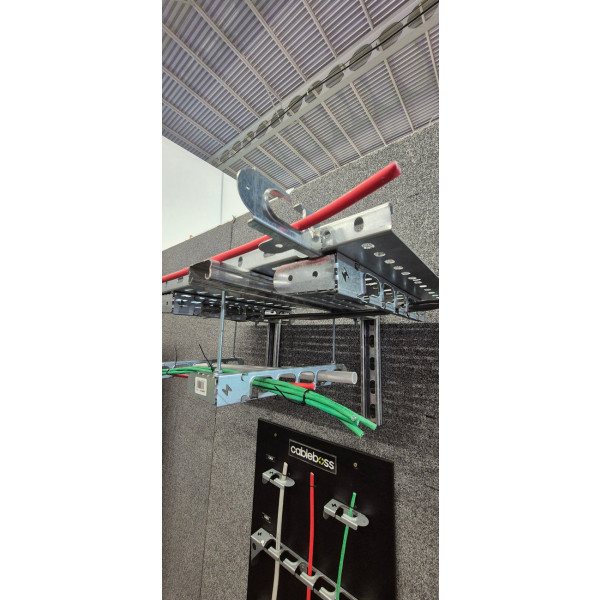
If you're routing cables above ceiling tiles, use ceiling hangers, cable baskets with drop rods, or J-hooks. You don’t want your data cable sitting on top of hot lighting fixtures, it’s not a spa day for your infrastructure.
Securing in Tight Spaces
When working behind walls or in confined spaces, you’ve got two main jobs, securing the cable and not losing your sanity.
Try these:
Wall cavity cable supports that slide in with the cable and expand to grip the internal surface
Flexible conduit for group runs that can be fixed with saddles or zip clips
Adhesive-backed mounts in places where drill access is impossible (though they’re not ideal for long-term heavy loads)
How Far Apart Should You Space Cable Brackets?
Spacing depends on cable type and environment, but here are some ballpark figures:
Every 300mm–400mm for light data cables
Every 600mm for heavier power cables
Closer spacing when going around corners, vertically, or in high vibration areas
The golden rule: if the cable starts to sag, your spacing is wrong.
Installing Cable Clips: Quick Tips
Want to avoid messy runs and sagging lines? Here’s how to install cable clips like a pro:
Use the right size for your cable diameter
Hammer or screw clips at a consistent height, use a chalk line for longer runs
Clip along natural lines (skirting boards, joists, ceiling edges) for a cleaner finish
Don’t over tighten, cables need a bit of breathing room to avoid crushing
And please, whatever you do, don’t route your Ethernet cable alongside a mains cable for metres on end unless you're hoping for a future in data corruption.

FAQs
What bracket should I use for Cat6 cables in a ceiling void?
Use cable baskets with ceiling drop rods or J-hooks spaced evenly to support the run without pressure points.
How do I secure cables behind plasterboard walls?
Use cavity cable supports or run a batten between studs to provide a solid mounting surface for clips or saddles.
What’s the best way to route cables across a suspended ceiling?
Avoid laying cables directly on tiles. Use cable trays, hangers, or conduit suspended from the structural ceiling.
Can I mix power and data cables on the same bracket?
Not advised. Keep them separate to avoid electrical interference and stay compliant with wiring regulations.
How often should I check bracket spacing on an installation?
Ideally, before you finish the job. But it’s smart to walk the line once you’re done to check for sagging or missed supports.

Final Thoughts
The bracket you use makes all the difference between a neat, reliable install and a cable jungle waiting to fail. Take time to choose based on your cable type, fixing surface, and environment, and never underestimate the power of a properly spaced bracket.
Remember: a tidy cable run is a happy cable run. And it won’t get you called back by an angry client wondering why their new data point is dangling like tinsel in July.
Related Products
