
What’s the Best Way to Test Patch Leads with My DSX-5000 or DSX-8000?
Posted on: 27/03/2025
Regarding testing patch leads, the Fluke DSX-5000 and DSX-8000 are the best tools for ensuring accurate results. So, how should they be used?
It's simple: these advanced cable testers are designed to make the testing process as easy as plugging in and pressing a button.
Let's dive into how you can quickly and effectively test your patch leads using these reliable devices.
It's simple: these advanced cable testers are designed to make the testing process as easy as plugging in and pressing a button.
Let's dive into how you can quickly and effectively test your patch leads using these reliable devices.
Why Choose the DSX-5000 or DSX-8000 for Testing Patch Leads?
Before we get into the nuts and bolts of testing, let's take a moment to understand why the DSX-5000 and DSX-8000 are ideal for patch lead testing. These tools are engineered for high-performance network testing and provide highly accurate results for all cabling, especially patch leads. With their built-in comprehensive features and intuitive interface, you can be confident that you're getting the best diagnostic information.
The Simple Steps for Testing Patch Leads
Testing patch leads doesn't have to be a complicated process, and with the DSX-5000 or DSX-8000, you'll be able to get results in no time. Here's how to do it:
Connect the Patch Lead: Plug one end of the patch lead into the DSX-5000/DSX-8000's central unit and the other into the remote unit. These devices have a remote module, so you must ensure both are adequately connected for accurate testing.
Select the Cable Type: The next step is selecting the cable type you're testing. Whether Cat5e, Cat6, or Cat6a, the DSX-5000 and DSX-8000 can easily be set to the correct type, ensuring that you're testing according to the proper standards.
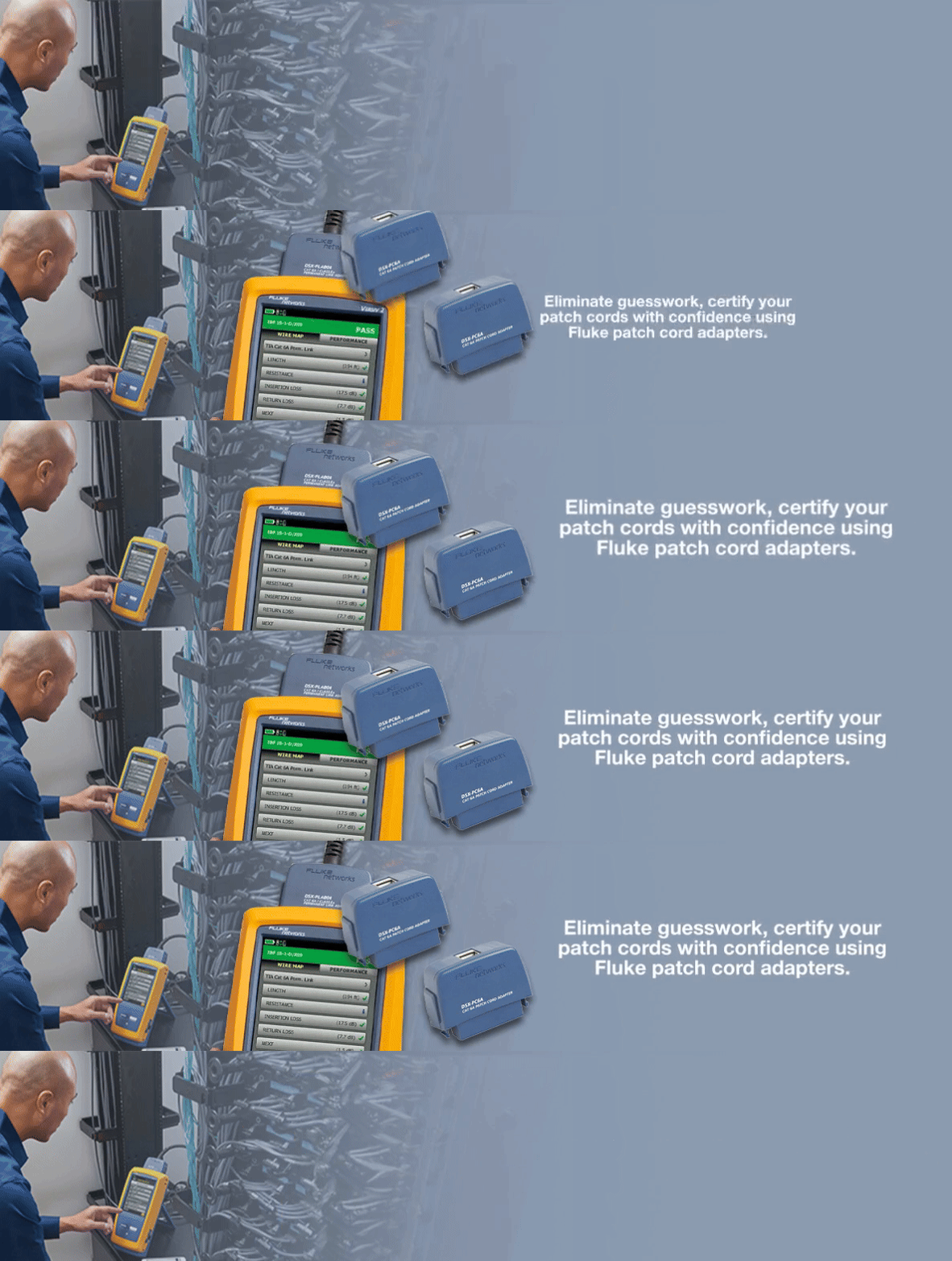
Start the Test: Hit the "test" button and let the DSX-5000/DSX-8000 do the hard work. It will automatically run through a series of tests to check for faults, wire map errors, and any issues with the patch lead's transmission capabilities.
Interpret the Results: The results will be displayed on the screen once the test is complete. You'll see a clear indication of whether the patch lead passes or fails the test. If there are any issues, you'll get detailed information on what needs to be fixed.
Wire Map: Verifying the correct wire map is crucial for testing patch leads. Ensure that the connections are correctly aligned for the best performance.
Length: You'll also want to check the cable length. Any discrepancy here could lead to signal degradation.
Continuity and Resistance: Your tester will check for any shorts or open circuits within the cable. High resistance can be a sign of faulty wiring or poor connections.
By following these simple steps, you'll quickly be able to verify the quality and reliability of your patch leads. No more guessing games, just solid, accurate results.
Interpret the Results: The results will be displayed on the screen once the test is complete. You'll see a clear indication of whether the patch lead passes or fails the test. If there are any issues, you'll get detailed information on what needs to be fixed.
What to Look for in Your Test Results
Wire Map: Verifying the correct wire map is crucial for testing patch leads. Ensure that the connections are correctly aligned for the best performance.
Length: You'll also want to check the cable length. Any discrepancy here could lead to signal degradation.
Continuity and Resistance: Your tester will check for any shorts or open circuits within the cable. High resistance can be a sign of faulty wiring or poor connections.
By following these simple steps, you'll quickly be able to verify the quality and reliability of your patch leads. No more guessing games, just solid, accurate results.

FAQs
Can I use the DSX-5000 or DSX-8000 to test other types of cables besides patch leads?
Yes, both devices can test a variety of network cables, including Cat5e, Cat6, Cat6a, and fibre optic cables. They're versatile tools for any network installer.
How accurate are the results when testing patch leads?
The Fluke DSX-5000 and DSX-8000 are incredibly accurate, providing precise diagnostics that ensure your patch leads are working properly.
Do I need additional accessories to test patch leads?
The DSX-5000 and DSX-8000 come with everything you need, including the central and remote units necessary to test patch leads.
Can the DSX-5000 or DSX-8000 detect issues in the cable beyond simple connectivity?
These devices detect wiring faults, resistance problems, and performance issues such as crosstalk or impedance mismatch.
How often should I test patch leads with the DSX-5000 or DSX-8000?
It's best practice to test your patch leads before installation and periodically throughout their use to ensure they're performing at their best. 
Wrapping Up
Testing patch leads with the Fluke DSX-5000 or DSX-8000 is as simple as a few quick steps, and the results will give you the peace of mind that your cables are working to their full potential.
These tools are invaluable for any data installer, electrician, or network professional who wants accurate, reliable results quickly.
Whether you're testing a batch of new patch leads or troubleshooting an existing network, the DSX-5000 and DSX-8000 will get the job done right. After all, no one has time for faulty connections, mainly when you can quickly test and verify.
Related Products
