

What Are the Different Types of Fusion Splicers?
Posted on: 03/02/2025
Let's get straight to it: fusion splicers come in various types, and the one you choose depends on the job. From core alignment to cladding alignment and even ribbon splicers for those hefty fibre bundles, there's a fusion splicer to fit your needs.

Core Alignment vs. Cladding Alignment: What's the Difference?
Fusion splicers fall into two main categories: core alignment and cladding alignment. Let's break it down:
Core Alignment Splicers: These are the crème de la crème. They use high-tech cameras to align the fibre cores with precision. They are perfect for high-performance installations where low loss is critical. Think of them as the "Ferrari" of splicers—fast, reliable, and a little more expensive.
Cladding Alignment Splicers: These align the outer layer of the fibres (the cladding) rather than the cores. While they're less accurate, they are also more budget-friendly and work well for more straightforward applications.
You should lean toward core alignment splicers for their precision in the data and voice networking industry. But electricians handling basic repairs? Cladding alignment works just fine.
What About Ribbon Splicers?
If you've ever looked at a bundle of fibres and thought, "This is going to take all day," let me introduce you to ribbon splicers. These beauties splice multiple fibres (typically 12) in one go. They're a game changer for large-scale projects like data centres, where efficiency is king.
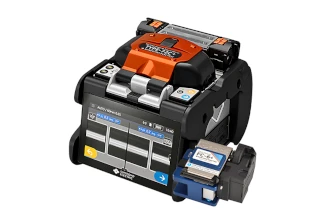
What About Ribbon Splicers?
If you've ever looked at a bundle of fibres and thought, "This is going to take all day," let me introduce you to ribbon splicers. These beauties splice multiple fibres (typically 12) in one go. They're a game changer for large-scale projects like data centres, where efficiency is king.
Why Does It Matter?
Choosing the wrong splicer is like bringing a butter knife to a steak dinner—it works, but you'll regret it. A core alignment splicer might be overkill for quick fixes, while a cladding alignment splicer could leave you struggling with high-loss connections on a critical install.
Hire or Buy?
Here's a quick plug: At CMW Ltd., we not only sell these splicers but also offer them for hire. Sometimes, you need a top-notch tool for a one-off job but don't want to blow your budget. Plus, we stock the latest models, like the Sumitomo 72C+ and Fujikura 90S+, so you're always working with the best.

FAQs
What is a fusion splicer, and how does it work?
A fusion splicer is a device that joins two optical fibres by fusing or welding them together. It aligns the fibre ends and uses an electric arc to melt and join the glass, creating a low-loss connection essential for fibre optic installations.
What's the difference between core alignment and cladding alignment splicers?
Core alignment splicers use cameras and sensors to align the fibre cores with high precision, which is ideal for critical installations. Cladding alignment splicers align the fibre cladding instead, making them less accurate but more cost-effective for more straightforward tasks.
What is a ribbon splicer used for?
Ribbon splicers are designed to simultaneously splice multiple fibres (usually 12), making them ideal for large-scale projects like data centres or installations with high fibre counts.
Should I hire or buy a fusion splicer?
Buying a fusion splicer may be more cost-effective if you frequently handle fibre optic installations. Hiring a splicer from companies like CMW Ltd is an excellent option for occasional use or specialised projects to save money while accessing top-of-the-line equipment.
What factors should I consider when choosing a fusion splicer?
Key factors include the type of alignment needed (core or cladding), the scale of your project (single or ribbon fibres), budget, and how frequently you'll use the splicer.

Final Thoughts
Fusion splicers are a must-have for any professional working with fibre optics, but not all splicers are created equal. Core alignment, cladding alignment, or ribbon splicers each has its place. And hey, if you're not ready to commit, our hire options mean you can test drive the "Ferrari" without buying the garage.
Related Products
