

Do I Really Need a Launch Cable for OTDR Testing? Here’s Why It Matters
Posted on: 10/04/2025
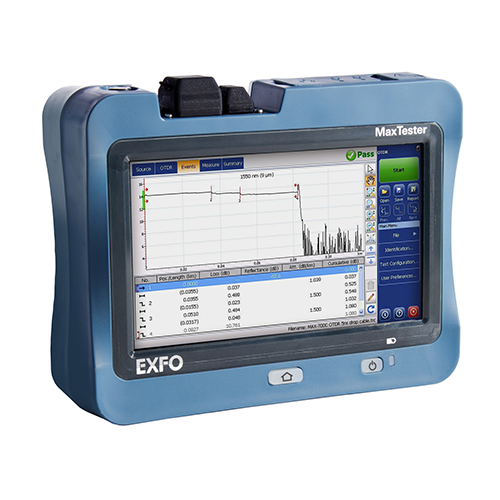
The short answer? Yes, if you care about accuracy, you need a launch cable for OTDR testing. Without one, you're flying blind when measuring loss at the near-end connection. An OTDR (Optical Time Domain Reflectometer) works by sending light pulses down a fibre and measuring reflections to detect faults, bends, or breaks. However, every OTDR has a "dead zone," meaning the first few metres of your test might not show any valuable data. A launch cable eliminates this issue by extending the fibre length, allowing the OTDR to correctly measure the loss at the first connection.

What Exactly is a Launch Cable?
A launch cable, sometimes called a pulse suppressor cable, is a fibre optic cable placed between your OTDR and the fibre under test. It serves three key functions:
Eliminates the OTDR's dead zone – Without a launch cable, you won't be able to measure the loss at the first connection accurately.
Provides a clearer baseline measurement—It ensures that the OTDR gives an accurate reading of the fibre being tested without interference from its internal reflections.
Helps identify connector and splice losses – With a launch and receive cable setup, you can measure loss at both ends of the fibre link.
What Happens If You Skip the Launch Cable?
Let's say you test a fibre link without a launch cable. What could go wrong?
You'll miss near-end faults. The OTDR dead zone hides critical issues at the start of the fibre.
You might misinterpret results – Without a launch cable, the first connector loss won't be measured correctly.
You risk inaccurate troubleshooting – If you're hunting for a problem in a network, missing the first few metres could mean an expensive mistake.
Think of it like checking your car's fuel efficiency without resetting the trip meter—you're guessing instead of getting precise data.
Choosing the Right Launch and Receive Cables
At CMW, we know that not all launch cables are created equal. When selecting one for your OTDR testing, consider:
Fibre type: Match your launch cable to the fibre you're testing (single-mode or multimode).
Length: 150m to 500m is typically recommended, but longer lengths may be needed for high-fibre-loss environments.
Connectors: Ensure compatibility with your OTDR and test fibre connectors (SC, LC, ST, etc.).
For best results, using both a launch and a receive cable ensures accurate loss measurements at both ends of your fibre run.

FAQs About Launch Cables and OTDR Testing
Can I use a short launch cable (under 100m)?
While possible, shorter launch cables may not eliminate the dead zone, leading to less accurate results.
Do I always need a receiving cable?
A receive cable helps measure loss at the far-end connection. If precise testing is required, using both launch and receive cables is a good idea.
Can I reuse the same launch cable for different tests?
Yes, as long as it matches the fibre type and is in good condition. Dirty or damaged connectors can impact accuracy.
Will any generic fibre patch lead work as a launch cable?
No, a standard patch lead is too short to eliminate the dead zone effectively. Proper launch cables are specifically designed for this purpose.
How do I maintain my launch cable?
To ensure accurate results over time, store it in a protective case, clean connectors regularly, and inspect for damage.

A launch cable is non-negotiable if you want reliable, accurate OTDR test results. It eliminates the dead zone, ensures proper loss measurements, and helps you confidently troubleshoot fibre networks. At CMW, we supply high-quality launch and receive cables designed for professional OTDR testing because guesswork isn't an option for fibre optic networks.
Related Products
